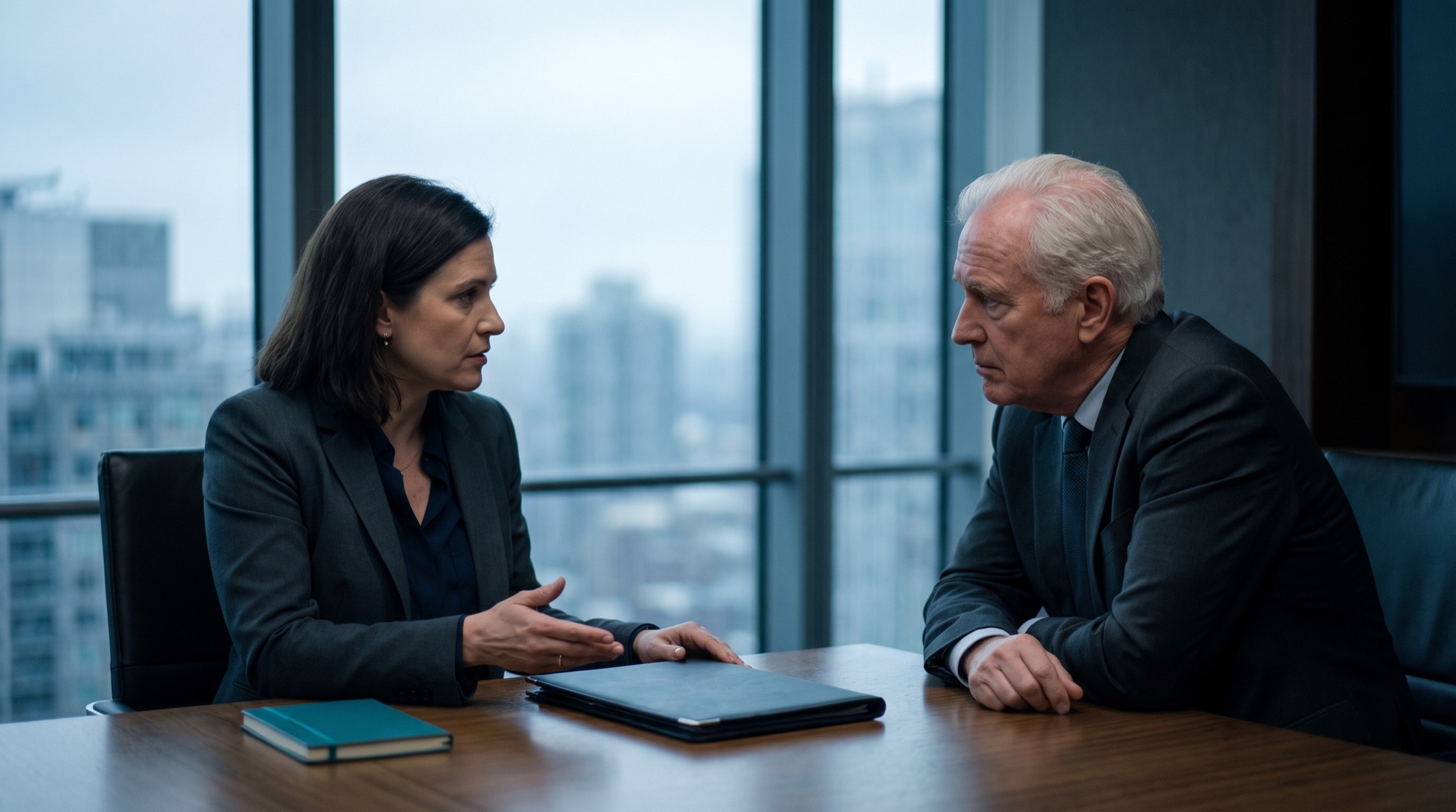
A senior advisor and a chief executive in a one-on-one strategic conversation in a boardroom

Workforce decisions carry a cost. Guesswork turns it into waste.

Make workforce decisions with evidence behind them. Work with senior advisors to address complex challenges, navigate change, and strengthen retention and engagement, informed by 25 years of research.

Compensation, acquisition, and development are necessary costs. Waste is what happens when workforce conditions undermine them. Our job is to help leaders tell the two apart and intervene before the erosion compounds.

What this is

A research firm at the leadership table.

Some workforce questions are bigger than one study. A merger has changed who works here. Turnover has become a board question. Engagement has to move across a whole enterprise, and it has to hold. Workforce Strategy Consulting is how Work Institute's senior advisors work directly with executive teams on those questions, bringing the research, the pattern recognition of nearly a million employee interviews, and the discipline to turn a strategy into a sequence of decisions with owners.

It is a partnership, not a product. The scope follows the question, and the advisors stay through the decisions.

Who it's for

CEOs, CHROs, COOs, and CFOs accountable for the cost and stability of the workforce; executive teams working through a merger, restructuring, rapid growth, or a persistent retention problem; and leaders who want an outside voice that argues from evidence rather than from a framework.

  • Senior advisors who have led the research and sat on the executive side of it
  • Nearly 1M interviews of evidence behind every recommendation
  • Cost vs. waste the distinction every workforce decision turns on
  • Scoped to the question a defined project or an ongoing advisory relationship
Where it helps

The shapes the work usually takes.

Every partnership is scoped to the organization's question. These are the questions we are most often asked to help with.

Retention strategy

How do we bring turnover down, and keep it down?

Cost of turnover quantified; causes ranked from research; a prioritized, owned strategy for the roles and units where preventable turnover is concentrated; and a measurement cadence that keeps it honest.

  • Cost-of-turnover model for your organization
  • Research-based priorities
  • Quarterly review against the numbers

Leading through change

How do we keep the workforce through a merger, restructuring, or growth?

A baseline of how employees are experiencing the change, early signals of where it is breaking, and advisory support for the executive decisions that follow, before resignations make them for you.

  • Baseline and re-measure across the change
  • Flight-risk signals by unit
  • Executive advisory through the transition

Enterprise engagement and leadership

How do we improve engagement and management across the whole organization?

A multi-year program that connects assessment, manager action planning, and leadership development into one accountable system. This is the model behind our longest client partnerships.

  • Assessment program with targets
  • Manager enablement at scale
  • Leadership development sequenced by the data

An advisor can also come in-house for a defined engagement (a leadership offsite, an executive briefing, or a specific decision) without a longer program.

Talk With an Expert
How it works

From the first conversation to a strategy leadership will own.

  1. Discovery

    Identify the real problem, and its cost.

    The first conversation is with a senior advisor. We help you name the problem, size what it is costing, and decide whether this is a study, a program, or a partnership.

  2. Evidence

    Ground the strategy in what employees say.

    Where the evidence is missing, we go and get it through interviews, an assessment, or both. Where you already have it, we read it against our research.

  3. Strategy

    Decide, sequence, assign.

    A workforce strategy with priorities in order, owners against each, and the measures that will show progress, built with the executive team, not delivered to it.

  4. Partnership

    Stay through the decisions.

    Regular advisory reviews against the numbers, with the research refreshed as the workforce changes. The advisors stay as long as the question does.

It pays for itself. Retain a small number of the people you would otherwise replace and the partnership has covered its cost.
Why Work Institute

Advisors who argue from evidence, not from a framework.

  • The data behind the advice is ours

    Twenty-five years and nearly a million coded employee interviews. When we say what tends to move turnover in organizations like yours, it is because we have watched it move.

  • Senior people, not a leverage model

    You work with the advisors who lead the firm and its research. Not a team assembled from a bench after the contract is signed.

  • Fluent in the executive question

    Cost and waste, not just scores. We help CFOs and COOs see the workforce the way they see the rest of the business and help CHROs make that case.

  • Research, action, and development in one firm

    The strategy does not stop at a recommendation. The research to ground it, the planning to execute it, and the leadership development to sustain it are all here.

Consulting is where all three steps (Listen, Learn, Act) run together at the executive level.

See the full approach 
Your questions, answered

What executives ask before they bring in an outside voice.

“Turnover isn't our biggest issue right now.”

It rarely is, until it is. Disengagement, leadership strain, and inefficiency usually exist long before people leave. A strategy built now is cheaper than one built after the board asks.

Explore workforce challenges
“We have HR. Why an outside partner?”

Because employees tell an outside researcher what they will not tell their employer, and because an outside voice with its own data carries weight at the leadership table that an internal team is often not granted. We work alongside HR, not around it.

How we listen
“What does the first conversation actually involve?”

A senior advisor, thirty minutes, and your situation. We will help identify the problem, put a rough cost on it, and say honestly whether it needs a study, a program, or a partnership. There is no proposal unless you ask for one.

Talk With an Expert
Proof, adjacent to the claim

Partnerships that changed the number the board was asking about.

View all case studies 
Dialysis network, post-merger
24% → 12%
turnover over four years

Seventy-three centers merged into one organization. A workforce-wide baseline, supervisor action plans, and biannual re-measurement took turnover to half and service-delivery costs to the lowest in the industry.

Read the case study 
Children's hospital
2007–2013
a six-year partnership

More than 4,000 exit interviews over six years drove a nursing career ladder, tuition partnerships, and unit-level plans. Divisional turnover fell, and critical-role turnover by as much as a third.

Read the case study 
Regional healthcare
≈ $940K
recovered each year

Ongoing exit and current-employee research surfaced four development areas. Leadership acted on each (benefits, pay structure, communication, onboarding) and turnover fell 32%.

Read the case study 

When leaders have clarity, organizations perform better. When employees are heard, cultures grow stronger. We exist to support both.

The Work Institute belief
The next step

Bring the question the board is asking. We'll help you answer it.

One conversation with a senior advisor, not a salesperson. Bring the workforce question in front of your leadership team and whatever numbers you have. You will leave with a clearer statement of the problem, a rough cost on it, and an honest view of whether it needs a study, a program, or a partnership.

  • Scoped to your question Retention, change, or enterprise engagement — we come prepared for it.
  • A senior advisor, not a rep You will talk with the people who lead the firm and its research.
  • No proposal unless you ask for one If a partnership makes sense, we will say so. If one study would do it, we will say that.

Talk with a senior advisor

We reply within one business day. No automated sequence.

We don't sell or share your information, and you won't be added to a drip campaign.